 Save to Pinterest
 I discovered hummus the way most people do—at someone's kitchen table, watching them pull out a container they'd made that morning. What struck me wasn't just how good it tasted, but how simple it was: chickpeas, tahini, lemon, garlic, and olive oil spinning into something silky and alive. Years later, I realized I'd been intimidated by nothing. The magic isn't in exotic technique; it's in patience and a good food processor.
There was an evening when I made hummus for friends who'd never had the homemade kind before. The look on their faces when they tasted how different it was from store-bought—creamy, alive with lemon, not gluey—made me understand why this spread has fed people for centuries. It became the dish I make when I want to say something without words.
Ingredients
- Cooked chickpeas: Use canned if you're short on time, but drain and rinse them twice to remove the starchy liquid that makes hummus grainy.
- Tahini: This sesame paste is the soul of the dish; stir it well before measuring because the oil separates as it sits.
- Lemon juice: Freshly squeezed makes a difference—it's brighter, more alive than bottled.
- Garlic: One small clove is enough; too much drowns out the delicate flavor of tahini and chickpeas.
- Cold water: This gets added slowly, tablespoon by tablespoon, until the hummus reaches that cloud-like texture.
- Ground cumin: A whisper of warmth that somehow makes everything taste more like itself.
- Sea salt: Fine salt dissolves instantly; coarse salt leaves little sharp surprises you didn't ask for.
- Extra virgin olive oil: Save the good stuff for the drizzle on top where you can taste it.
- Paprika or sumac: This is your finishing note—choose paprika for warmth or sumac for a subtle tang.
- Fresh parsley: A handful chopped just before serving brings color and a green, herbaceous finish.
Tired of Takeout? 🥡
Get 10 meals you can make faster than delivery arrives. Seriously.
One email. No spam. Unsubscribe anytime.
Instructions
- Gather and prep:
- Drain your chickpeas and let them sit in a colander for a moment so they're not waterlogged going into the processor.
- Build your base:
- Add chickpeas, tahini, lemon juice, minced garlic, cold water, cumin, and salt to the food processor bowl. Start the machine and let it run, watching as everything gradually turns pale and creamy.
- Blend until silky:
- Stop every 30 seconds to scrape down the sides with a spatula—this ensures everything gets incorporated evenly. The transformation is gradual, then sudden.
- Adjust the texture:
- If it looks thick and clumpy, add cold water one tablespoon at a time and blend again. The goal is something that flows slightly on a plate but holds its shape.
- Taste and season:
- Scoop a small spoonful onto your finger and taste it plain. Does it need more salt, more lemon, more garlic? Trust what your palate tells you.
- Transfer and shape:
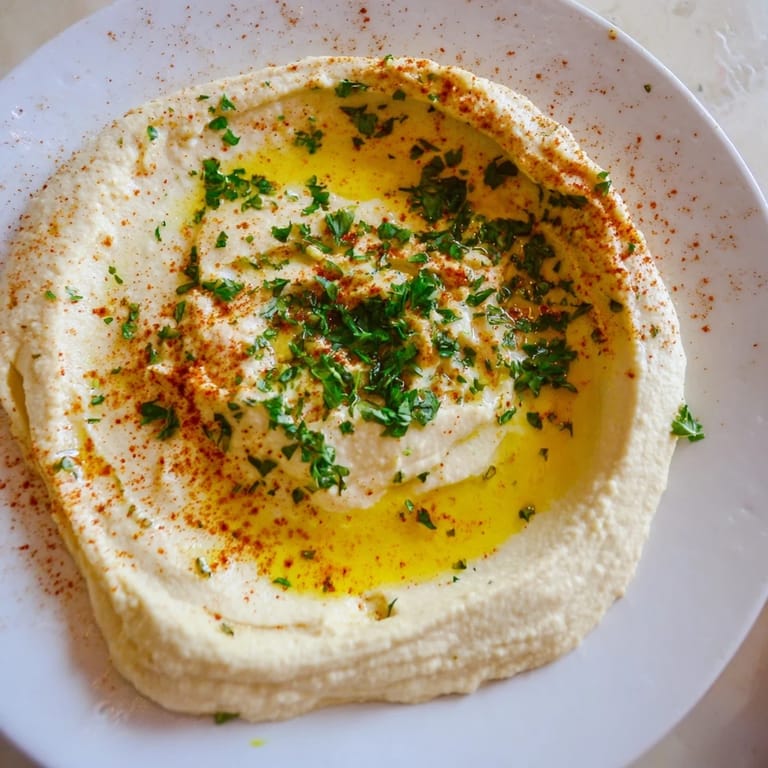
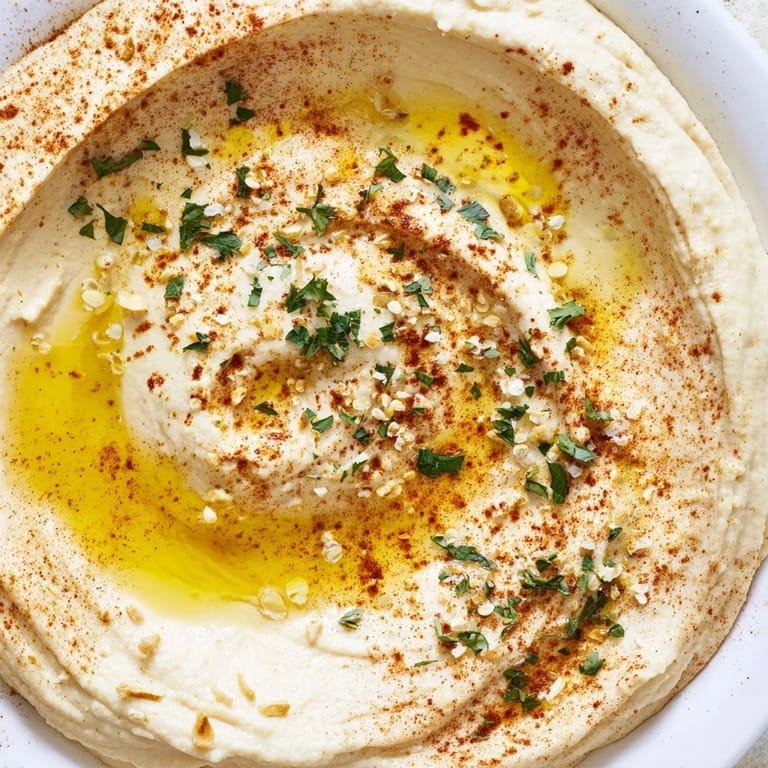
- Spoon the hummus into a shallow serving dish, then use the back of a spoon to create a gentle well or swirl in the center—this is where the olive oil will pool.
- Finish with care:
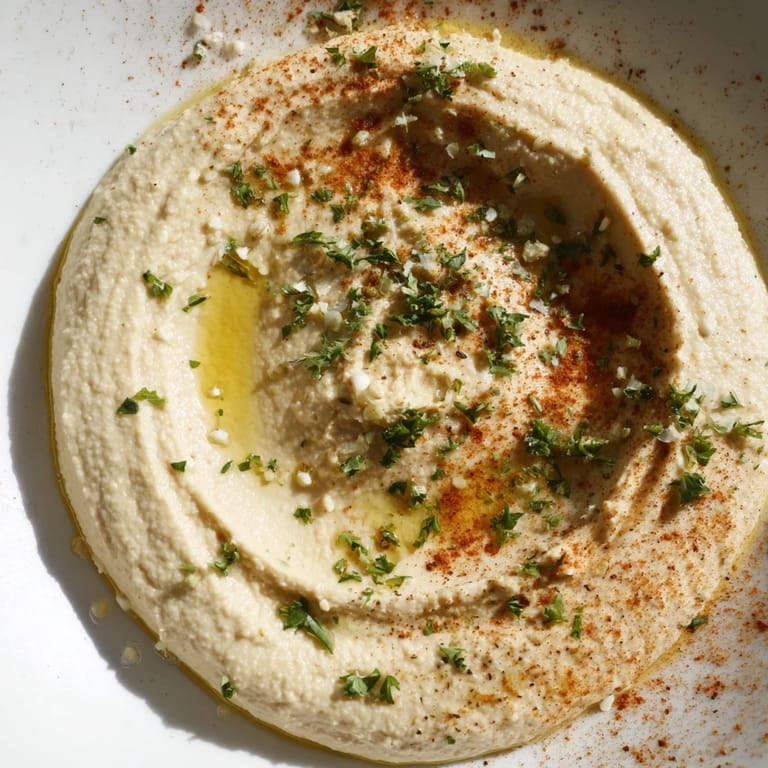
- Drizzle your best olive oil into that well, letting it catch the light. Dust with paprika or sumac and scatter fresh parsley across the surface.
- Serve fresh:
- Set it out with warm pita, cucumber slices, carrot sticks, or as part of a larger mezze spread.
 Save to Pinterest
 I remember the first time someone told me they'd never had good hummus, only the kind from a plastic tub. I made them a batch and watched it disappear like I wasn't even watching. That moment changed how I think about simple food—it's not about complexity, it's about respect for the ingredients and your guests.
The Tahini Question
Tahini can be tricky because it's raw, not roasted—it has a subtle, almost grassy flavor that some people find stronger than expected. If your hummus tastes too intense, it's not you; it might just be the tahini. Look for brands that are lighter in color and milder in taste, or balance a stronger tahini with a touch more lemon juice. The sesame flavor should be present but never overwhelming.
Texture and Time
The texture of hummus matters more than people realize. Too thick and it feels heavy; too thin and it's more like a sauce. The sweet spot is when a spoonful sits on a plate with a gentle, almost liquid edge that spreads slightly as it cools. Chickpeas release starch as you blend, which helps create that creamy base, but over-blending can make it gluey instead of smooth. Give it time, but not too much.
Building a Mezze Moment
Hummus doesn't exist in isolation—it's meant to be part of a conversation on the table. Warm pita pulled from a skillet, brined olives, fresh vegetables in season, labneh or feta cheese, maybe some roasted eggplant. The hummus is the anchor, generous and welcoming, but everything around it matters just as much. When you serve it, you're not just offering food; you're inviting people to slow down and eat together.
- Make hummus a few hours ahead so the flavors settle and meld.
- Reserve a few whole chickpeas to scatter on top with the parsley for texture and visual interest.
- If you're serving a crowd, make two batches rather than one giant one—freshly finished hummus tastes noticeably better.
 Save to Pinterest
 Hummus is the kind of recipe that rewards you for caring—not much, just enough to do it right. Once you've made it once, you'll find yourself making it all the time.
Recipe FAQs
- → What ingredients give this spread its creamy texture?
The creamy texture comes from blending cooked chickpeas with tahini, lemon juice, and olive oil until smooth and silky.
- → Can I adjust the thickness of the spread?
Yes, adding cold water gradually during blending helps achieve the desired consistency, from thick to creamy.
- → How can I enhance the flavor of the spread?
Adding fresh garlic, ground cumin, and adjusting salt and lemon juice balances and enriches the flavor profile.
- → What garnishes complement this dish?
Drizzling extra virgin olive oil and sprinkling paprika or sumac along with fresh parsley adds color and bright flavors.
- → What is the best way to store leftovers?
Keep in an airtight container refrigerated for up to four days to maintain freshness and flavor.